

NFA AND CEPA FORMALIZE PARTNERSHIP TO STRENGTHEN SUSTAINABLE FISHERIES AND ENVIRONMENTAL PROTECTION

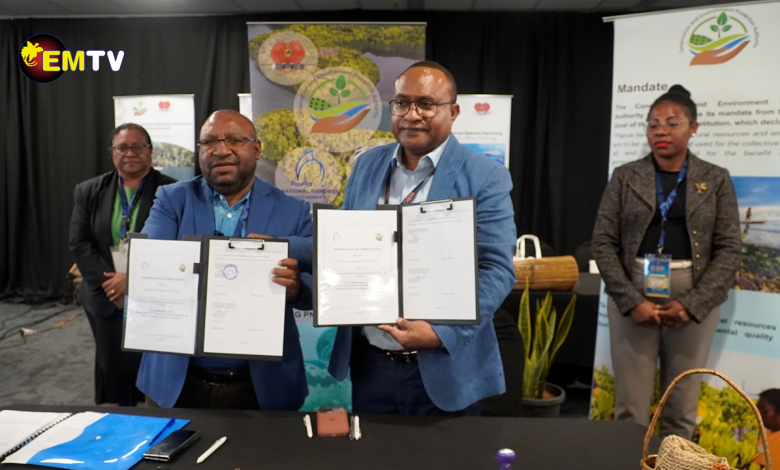
Left-to-Right: Conservation and Environment Protection Authority Managing Director Jude Tukuliya and National Fisheries Authority Managing Director Justin Ilakini sign the MOU during a side event at the Melanesian Ocean Summit 2026, underway in Port Moresby. Picture supplied.
The agreement reinforces collaboration between the two agencies in the management, protection, and sustainable use of Papua New Guinea’s fisheries and marine resources.
Speaking during a side event at the Melanesian Ocean Summit 2026, Managing Director of the National Fisheries Authority, Justin Ilakini, said the partnership reflects a shared commitment to ensuring fisheries development is balanced with environmental sustainability and the protection of marine ecosystems and coastal communities.
“Today’s signing represents an important step forward in strengthening cooperation between NFA and CEPA. Through this MOU, we are reinforcing our joint responsibility to sustainably manage Papua New Guinea’s marine and fisheries resources while meeting our national, regional, and international environmental and fisheries obligations,” Ilakini said.
Ilakini said the collaboration would focus on several key priority areas, including marine ecosystem protection, effective management of Marine Protected Areas and Wildlife Management Areas, and strengthening Environmental Impact Assessments for fisheries-related projects.
Other focus areas include safeguarding endangered marine species, addressing marine pollution arising from fisheries activities, and promoting sustainable coastal resource management, particularly in support of community-based fisheries.
“This partnership provides a strong framework for both agencies to work together in addressing emerging environmental and fisheries challenges. It also gives us the flexibility to explore new areas of cooperation aligned with national priorities,” he said.
Ilakini further highlighted carbon trading as a key area of interest under the collaboration.
“We see significant opportunities in exploring carbon trading and its implications for the fishing industry. This includes assessing the potential for fisheries and coastal ecosystems, such as mangroves and seagrass beds, to generate carbon credits through carbon storage initiatives,” he said.
He added that the collaboration would also support sustainable fishing practices that reduce carbon emissions and contribute to national and global climate goals.
“Importantly, carbon trading initiatives could create new revenue streams for communities and fisheries operators, providing incentives for stronger environmental management while ensuring that ecosystem health and biodiversity are protected,” Ilakini added.
Ilakini said NFA looks forward to working closely with CEPA and other stakeholders to effectively implement the agreement and deliver positive outcomes for Papua New Guinea’s fisheries sector and the environment.