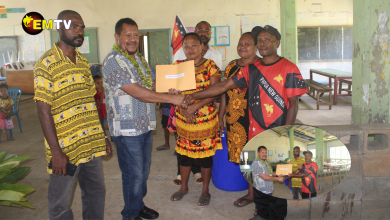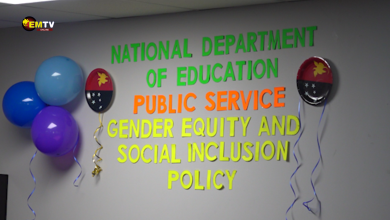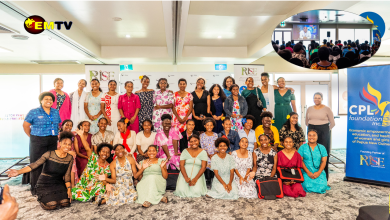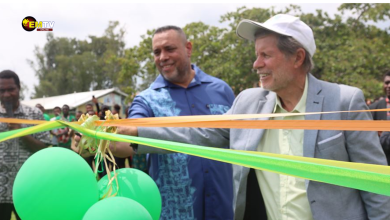



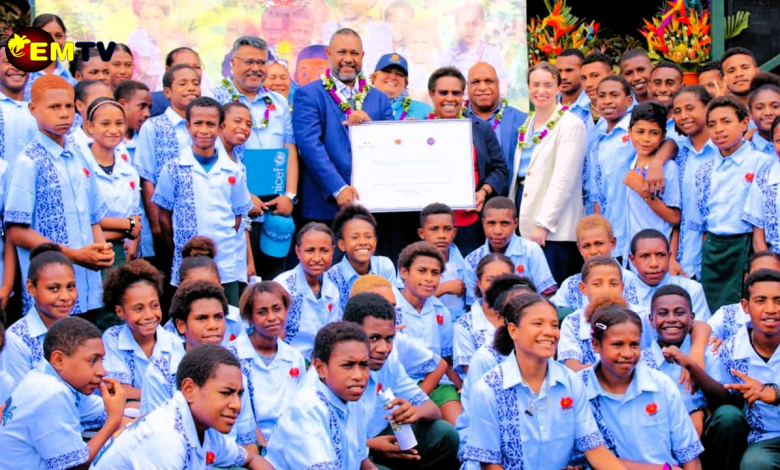
The National Department of Education, in partnership with the Government of Australia and UNICEF Papua New Guinea, yesterday rolled out the landmark Smarter Safer Schools (3S) Programme at Iobuna-Kouba Primary School located at 15 mile in the Hiri Koiari District, with Central Governor Rufina Peter officially launching the initiative.
Speaking at the launch, Governor Peter described the programme as “a transformative step forward” for education
“This is not just about infrastructure,” she said. “It is about strengthening leadership, building teacher capacity, improving literacy and numeracy, integrating digital learning and ensuring our schools are safe and resilient in the face of disasters.”
She said the 3S Programme directly supports Papua New Guinea’s 1-6-6 education reform — a bold national restructuring aimed at improving quality, access and equity across the education system.
Governor Peter emphasized that strong institutions, capable teachers, effective monitoring systems and sustained investment are critical. “The Smarter Safer Schools Programme strengthens these foundations. It ensures that reform translates into real improvements in classrooms and measurable learning gains for our children,” she said.
Governor Peter said by reinforcing provincial and district-level systems, the programme supports national development priorities and contributes to building a more skilled and resilient workforce for the future. Driven by UNICEF in support of Papua New Guinea’s National Education Plan 2020 to 2029, the Smarter Safer Schools Programme strengthens safer, more resilient and inclusive learning environments while supporting the implementation of the 1-6-6 education structure.
The governor mentioned that the initiative aims to increase the number and proportion of school age children and adolescents, especially girls, children with disabilities and those affected by crises and 2023 TO 2027 disasters, who remain in school and achieve improved learning outcomes, particularly in foundational literacy and numeracy. Guided by the Comprehensive School Safety Framework (CSSF) 2022 to 2030, it adopts an all-hazards approach, addressing natural disasters, climate change, pandemics, conflict and everyday safety risks that can disrupt learning. The Smarter, Safer Schools concept adopts an all-hazards approach — addressing natural disasters, climate change, pandemics, conflict and everyday safety threats. The programme focuses on three strategic pillars:
• Learner Safety and Wellbeing Promoting safe school environments, prevention of violence and psychosocial support for learners.
• Climate Resilient and Disaster Prepared Schools Strengthening disaster risk management, climate adaptation and WASH services in schools.
• Education System Strengthening for the 1-6-6 Reform Enhancing teacher capacity, school leadership, digital learning and data systems to improve learning outcomes. It also promotes child-cantered participation, psychosocial support for learners, and climate-smart solutions such as solarisation and environmental education.
Governor Peter said protecting schools from hazards protects the nation’s investment in its future. “When our schools are safe, learning does not stop — even in times of crisis,” she said.
The Smarter Safer Schools Programme is a four-year national partnership designed to strengthen Papua New Guinea’s education system and improve learning outcomes for children. An AUD 33 million investment from the Australian Government, the programme is implemented in close collaboration with the Government of Papua New Guinea and UNICEF. The initiative will operate in 600 schools across six provinces. It begins in Central, Morobe and Western Highlands before expanding to East Sepik, East New Britain and the Autonomous Region of Bougainville. reform in Central Province and the nation.