


As PNG advances its participation in global and regional cyber diplomacy processes, such as the UN Open-Ended Working Group (OEWG) on ICT security, deepening national cyber legal capability has become a strategic necessity.
In 2024–2025, PNG took significant steps that signal its commitment to the international cyber legal order, including:
- Participation in the UN negotiation process leading to the UN Convention Against Cybercrime (adopted 24 December 2024).
- Government approval for PNG to accede to the Budapest Convention on Cybercrime, pending completion of constitutional and procedural steps.
- Strengthened engagement with multilateral and regional cyber mechanisms, including UNODC, the Council of Europe, PIF, APT, and ASEAN partners.
- Development and implementation of key national policies (Digital Transformation Policy, Data Governance and Protection Policy, National Cybersecurity Policy, National Security Policy, Government Cloud Policy, etc.).
These policy advancements created an urgent need to strengthen the understanding and application of international law as it applies to cyberspace, both for operational agencies and for those contributing to national cyber policy, diplomacy, regulation, security, and enforcement.
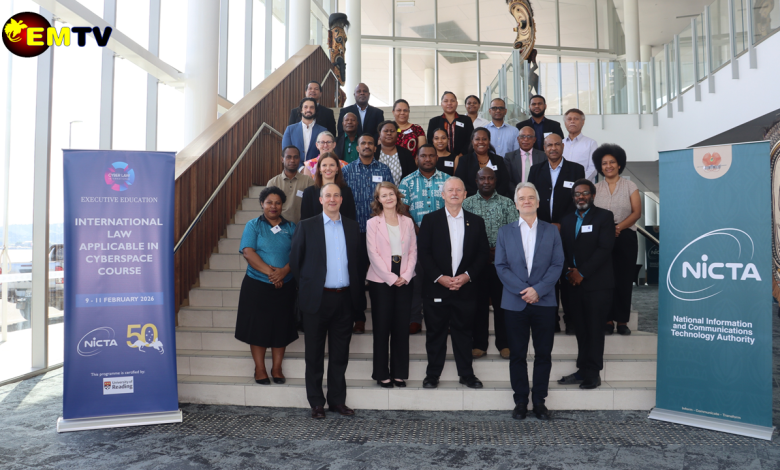
With efforts to addressing this, The National ICT Authority in partnership with Cyber Law International are convening a four-day capacity building programme from February 09th to 12th at the APEC House in port Moresby to strengthen PNG’s national capacity to understand, interpret, apply, and leverage international law in cyberspace.
This programme comprises of the Executive Course on the Application of International Law in Cyberspace; and a Workshop on the development of national positions, cybercrime frameworks, and cross-border digital evidence to strengthen PNG’s national capacity to understand, interpret, apply, and leverage international law in cyberspace by equipping participants with:
- Comprehensive knowledge of the international legal landscape governing cyber operations;
- Practical skills to analyse real or simulated cyber incidents;
- Understanding of international cybercrime frameworks relevant to domestic law reform;
- Tools to contribute to a future PNG National Position on International Law in Cyberspace; and
- Capability to engage in multilateral cyber negotiations with confidence and coherence.