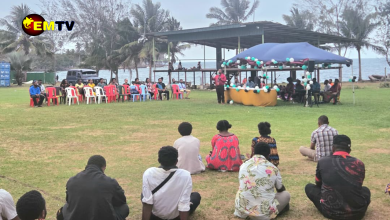



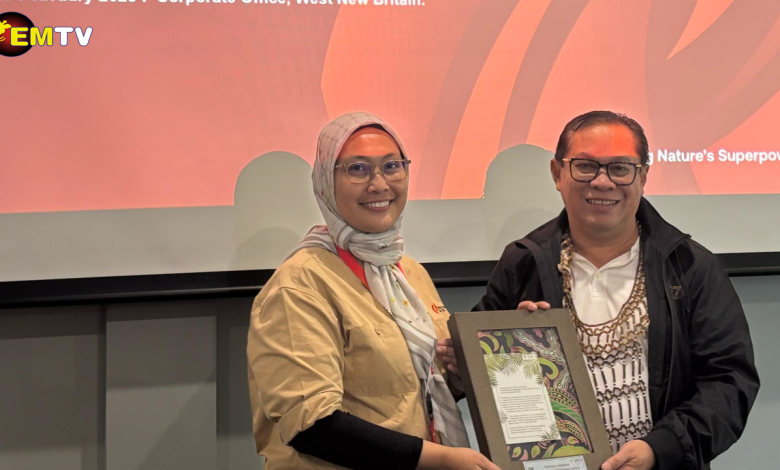
New Britain Palm Oil Ltd (NBPOL) has reaffirmed its commitment to the sustainable growth of Papua New Guinea’s palm oil industry during a high-level visit by the Council of Palm Oil Producing Countries (CPOPC) to the company’s headquarters in Mosa, West New Britain Province last week.
NBPOL’s Chief Operating Officer (COO), Nik Maziah Nik Mustapha said the visit comes as PNG formally became the fourth member of CPOPC on December 1, 2024, after a four-year wait.
“Congratulations to the Papua New Guinea government, and we are, very happy to be part of the palm oil industry for Papua New Guinea and contributing as well to CPOPC,” Maziah said.
Maziah emphasized the company’s adherence to sustainability standards, noting that “NBPOL is the only operation that has 100% fully certified oil” under the Roundtable on Sustainable Palm Oil (RSPO).
She highlighted that PNG’s oil palm sector is vital to economic development, supporting local employment and smallholder farmers. “Every fortnight the kind of money that’s being churned out and traded after our pay week is significant to the economy of West New Britain and also to the other provinces that we operate in,” she said.
However, aging palm trees pose a major challenge for production. “Easily, 80% of our out growers’ palms are already above the age of 19, and 29% are more than 25 years old,” she said.
She stressed the urgent need for replanting programmes and financial support for smallholder farmers, warning that “our CPO volume has been on a decreasing trend because of less productive farms contributing to our mills.”
With PNG now part of CPOPC, the country joins Malaysia, Indonesia, and Honduras in representing 84% of the world’s crude palm oil (CPO) production. “With including the observing countries, another four, it’s 88.9%,” Nik Maziah stated, reinforcing PNG’s position as a key player in the global market.
However, international trade barriers remain a concern. “The global palm oil industry is under scrutiny and it should be a win-win situation where a country is expected to preserve its nature, then some other country benefiting must pay for these carbon credits,” she said.
She also underscored the need for PNG to establish its own palm oil certification system, similar to Malaysia’s MSPO and Indonesia’s ISPO. “If PNG can have its own certification, it will be able to sustain itself IN larger markets outside of just Europe,” she said.
Beyond palm oil, NBPOL has expanded into other sectors, including cattle and sugar production. “We are the only, commercial sugar plantation in the country,” Maziah said.
NBPOL is also investing in renewable energy. “We have our biogas plant that helps supplement the power requirement for our mills and to energize our compounds for our employees,” she said.
The company plans to expand its biogas facilities across its operations in the coming years.