

EU-STREIT PNG CLOSES AFTER REACHING HALF A MILLION PEOPLE, ENSURED SCALABLE BUSINESS DEVELOPMENT SYSTEM FOR PNG

EU-STREIT PNG program has reached 513,500 people in East and West Sepik and benefited more than 85,500 families since its inception in 2020.
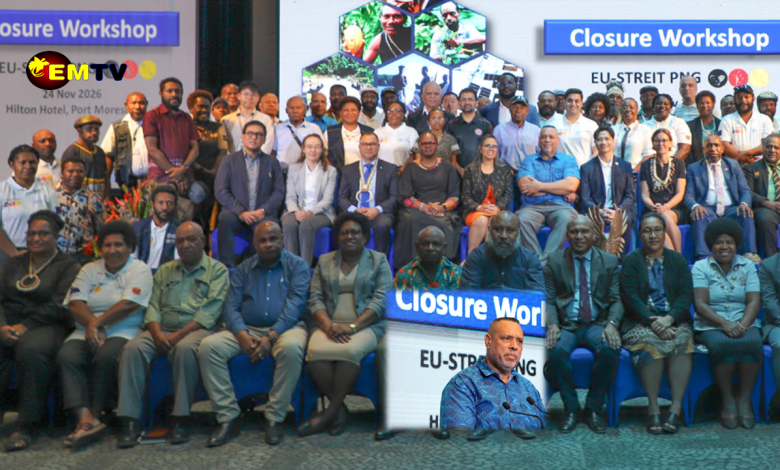
This was revealed during the partners meeting to mark the closure of the program in Port Moresby.
According to EU-STREIT PNG, the program has helped create more than 26,000 full-time jobs and trained more than 34,000 farmers, and 700 micro, small and medium agribusinesses have been created, strengthened, and matured, according to the organization.
East Sepik Governor Allan Bird, said the change has reached remote parts of East Sepik. “My rural people now actually have income to support themselves even through this El Niño period.”
Nine rural farm-to-market roads, more than 500 kilometres in total, have been rehabilitated, creating more than 360,000 workdays of decent employment, and 21 Digital Resource Centres have been established.
Deputy Head of Mission of the European Union in Papua New Guine Stephanie Vadde, said “The EU-STREIT PNG has delivered tangible results on the ground through vital infrastructure such as roads, airstrips, digital resource centres, and cocoa and vanilla aggregation storages,”
“Equally significant is the human impact, with thousands of local entrepreneurs equipped with practical business skills, giving communities new opportunities to improve their livelihoods.”
Deputy Secretary of the Department of National Planning and Monitoring Michael Kumung, said, “This programme has taught us a lot of lessons,”
“We in government have learned from the EU-STREIT Programme story and can replicate [it] for coffee, coconut and other commodities to support rural development initiatives in Papua New Guinea.”
Across both provinces, the Programme established 170 cocoa storage sheds and introduced 100 solar combination cocoa dryers and 600 solar vanilla dryers. Farmers have received and planted more than 3.8 million cocoa seedlings tolerant to cocoa pod borer and provided with more than 771,000 healthy vanilla vines, while fishers and fish farmers received 330 boats and canoes, 30 solar freezers and more than 135,000 fingerlings.
Sepik produce is reaching new buyers. Cocoa now has access to niche markets in Australia, New Zealand, Singapore, United Kingdom, Italy, China, and the Philippines, and Paradise Foods Limited, as the largest cocoa processing facility in the country has been supported to install 12 new processing machineries, increasing the chocolate production capacity by 10-fold. Vanilla trade is also shifting from informal exports to cooperative-led sales in premium markets to the Middle East, European Union and United States.
“The lessons we have learned in the Sepik can be applied to our other projects across the country,” said Dr Kachen Wongsathapornchai, Head of Office of the Food and Agriculture Organization of the United Nations (FAO) in Papua New Guinea. “By connecting local production with processors and linking markets through reliable infrastructure and modern technologies, we can replicate this success and drive sustainable development in other provinces.”