

OIL PALM FESTIVAL BATTLES THE VERY THREAT IT’S NAMED AFTER, SAYS NATIONAL MUSEUM CURATOR

By Wasita Royal
As the Oil Palm Festival of Arts and Culture closes its curtains at Sir John Maneke Stadium in West New Britain Province recntly, the nation’s chief curator of modern history has warned that the monoculture celebrated in the festival’s name is quietly stripping away the very cultural diversity the event seeks to protect.
Chief Curator of Modern History at the National Museum and Art Gallery
Dr Gregory Bablis, delivered a stark assessment on the festival’s second day, linking large-scale oil palm cultivation to the disappearance of the forests that supply traditional building materials and ceremonial regalia.
“When you decrease your natural biodiversity, you also take away from your cultural diversity,” Dr Bablis said. He explained that oil palm, as a single crop covering vast areas,it removes the raw plants and trees that the communities rely on to build houses and craft lataya regalia, placing intangible heritage at risk.
The curator’s commentary then moved from warning to action. The arts and culture sector, he argued, has taken on a critical counterweight role. Through festivals like this one, the National Cultural Commission and its partners are actively working to preserve what he called “our knowledge systems, our ideas, our beliefs.”
The National Museum and Art Gallery, Dr Bablis revealed, has been doing parallel work in West New Britain for decades, protecting sites that stretch far beyond the oil palm era.
He spoke of the province’s Lapita sites which were left by Austronesian-speaking people who migrated into the Pacific 3,500 years ago and of obsidian sources that fed ancient trade networks. Closer to the present, the museum has worked closely with Japanese, American and Australian governments to recover the human remains of soldiers lost on the province’s World War II battlefields, especially along the south coast.
“A lot of that war history is still here,” Dr Bablis said. “The National Museum and Art Gallery has been working for a long time to preserve this historical heritage and help other countries find their human remains, promoting the shared historical heritage that we have.”
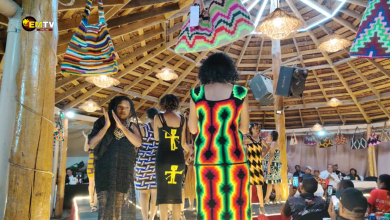
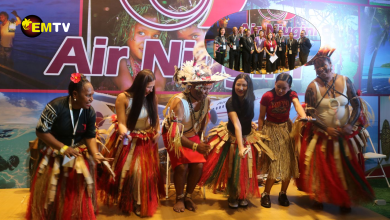
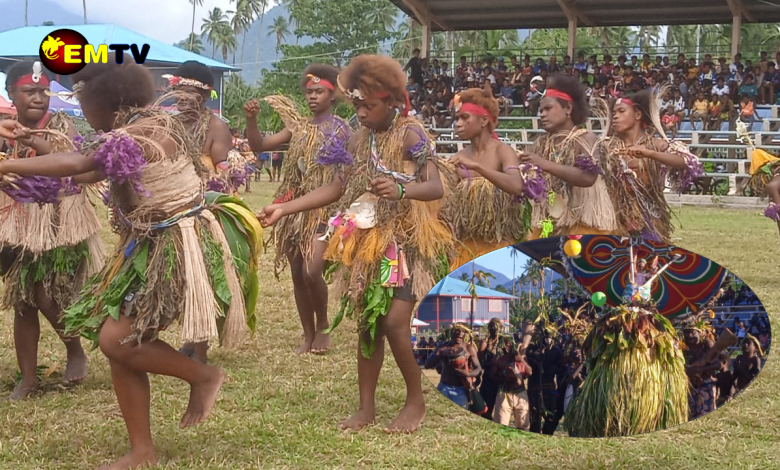
During the festival’s final day, performers and custodians again fill the stadium with dances and displays that draw from the very traditions under pressure. Dr Bablis’s message frames their efforts as more than entertainment: each song, each woven bilum, each piece of regalia is a stand against the silent erosion of identity that can follow a single crop across a landscape.